Side Dishes and Accompaniments in Pub Meals
Comprehensive analysis of chips, vegetables, and gravy data.
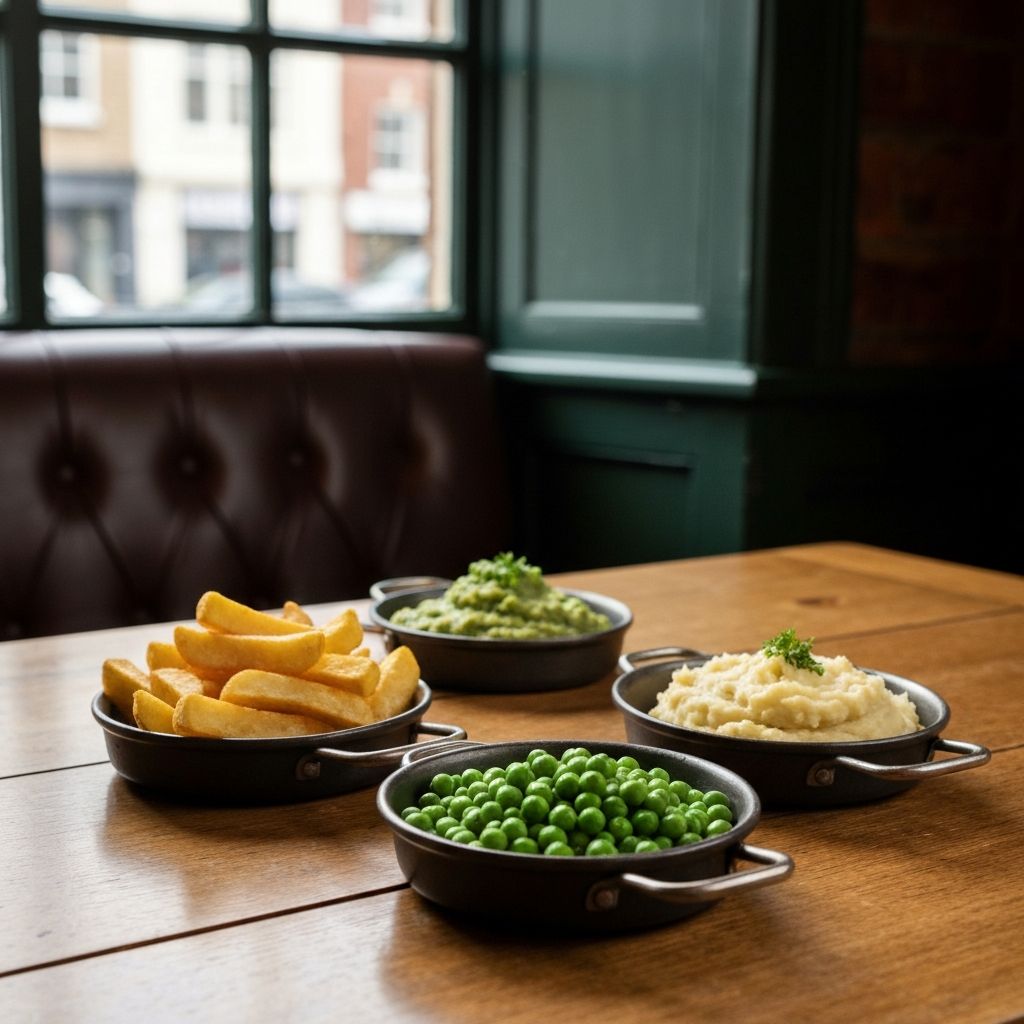
Comprehensive analysis of chips, vegetables, and gravy data.
Side dishes and accompaniments significantly contribute to the overall nutritional profile of pub meals. These components often determine the final energy density and macronutrient composition of complete meals. Understanding individual side dish profiles provides essential context for assessing total meal composition.
Chips represent the most common side dish in British pubs, prepared by deep-frying cut potatoes in oil. This preparation method substantially increases fat and energy density compared to boiled or baked potatoes.
| Preparation Method | Per 100g (kcal) | Per Typical Serving (kcal) | Fat (g) | Carbohydrates (g) |
|---|---|---|---|---|
| Boiled potato | 77 | 115 | 0.1 | 17 |
| Oven-baked chips | 150 | 225 | 3.5 | 28 |
| Deep-fried chips (pub style, thick-cut) | 265 | 398-530 | 15 | 30 |
The variation in total calories reflects typical pub serving sizes, which commonly range from 150-200g. The fat content derives from oil absorption during deep frying at high temperatures.
| Chip Style | Per 100g (kcal) | Fat (g) | Texture/Preparation |
|---|---|---|---|
| Thin-cut chips | 280 | 17 | Crispy exterior, thin interior |
| Thick-cut chips (standard pub) | 265 | 15 | Crispy exterior, fluffy interior |
| Steak chips (extra thick) | 240 | 12 | Crispy exterior, soft interior |
Mashed potato represents a carbohydrate-based side, prepared by boiling and mashing potatoes with butter, milk, and seasoning.
| Component | Per 100g (kcal) | Per Typical Serving (kcal) | Fat (g) | Protein (g) |
|---|---|---|---|---|
| Potatoes (boiled) | 77 | 115 | 0.1 | 2 |
| Butter (per 20g) | 717 | 143 | 16 | 0.1 |
| Milk (per 30ml) | 61 | 18 | 2.2 | 1 |
| Complete mashed potato | 100 | 150-200 | 3.5 | 3 |
Energy density of mashed potato (0.96-1.0 kcal/g) remains lower than deep-fried chips, though butter and milk additions increase total energy compared to plain boiled potatoes.
Mushy peas comprise cooked dried marrowfat peas, traditionally cooked until they achieve a soft, mashed texture.
| Component | Per 100g (kcal) | Per Serving (kcal) | Protein (g) | Fibre (g) |
|---|---|---|---|---|
| Mushy peas (with salt and pepper) | 75 | 112-150 | 6 | 4 |
Mushy peas provide substantial protein and fibre content relative to energy density, along with micronutrients including iron and folate. The traditional preparation involves minimal added fat.
Pub meals frequently include steamed vegetables as alternative or additional side options.
| Vegetable (steamed/boiled) | Per 100g (kcal) | Per Serving (kcal) | Fibre (g) | Carbohydrates (g) |
|---|---|---|---|---|
| Broccoli | 34 | 51 | 2.2 | 7 |
| Carrots | 41 | 62 | 2.4 | 10 |
| Green beans | 31 | 46 | 2.1 | 7 |
| Peas (frozen, steamed) | 80 | 120 | 4 | 14 |
Gravies and sauces serve as important accompaniments, adding flavour whilst contributing meaningfully to total sodium and fat content.
| Sauce Type | Per 100ml (kcal) | Per Ladle/serving (kcal) | Fat (g) | Sodium (mg) |
|---|---|---|---|---|
| Beef gravy (flour-thickened) | 25 | 50-80 | 1.2 | 380 |
| Onion gravy | 30 | 60-90 | 1.5 | 420 |
| Peppercorn sauce | 100 | 150-180 | 8 | 300 |
| Tartar sauce (mayo-based) | 350 | 52-70 | 38 | 280 |
Coleslaw and salads serve as potential vegetable-based accompaniments, though preparation method substantially influences nutritional profile.
| Accompaniment | Per 100g (kcal) | Per Serving (kcal) | Fat (g) | Fibre (g) |
|---|---|---|---|---|
| Coleslaw (mayo-based) | 160 | 160-200 | 14 | 1.5 |
| Mixed salad (oil dressing) | 80 | 120-150 | 5.2 | 3 |
| Green salad (minimal dressing) | 15 | 30-45 | 0.3 | 2 |
Bread accompaniments are occasionally provided with meals, particularly soups or stews.
| Bread Type | Per 100g (kcal) | Per Slice/Roll (kcal) | Fat (g) | Fibre (g) |
|---|---|---|---|---|
| White bread | 265 | 80 | 1.5 | 1.2 |
| Wholemeal bread | 215 | 65 | 1.3 | 3.5 |
| Dinner roll (buttered) | 310 | 155 | 12 | 1.5 |
Various condiments are commonly added to sides, particularly chips.
| Condiment | Per Tablespoon (kcal) | Typical Application (kcal) | Fat (g) |
|---|---|---|---|
| Malt vinegar | 5 | 5-15 | 0 |
| Tomato ketchup | 15 | 15-30 | 0 |
| Mayonnaise | 100 | 50-100 | 11 |
Side dishes and accompaniments often constitute 40-60% of total meal energy content when added to main proteins. For example:
Side dishes substantially contribute to total meal sodium intake:
This information serves an educational purpose regarding the nutritional composition of traditional British pub meals.
Learn about energy content